Executive Summary
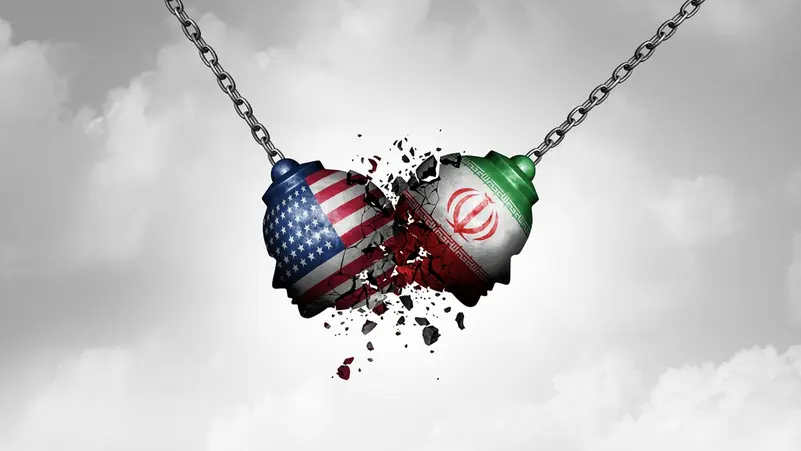
If the benchmark is direct military impact, the United States and its allies achieved clear firepower superiority and inflicted severe damage on Iran’s leadership and military structure, including the killing of the Supreme Leader Ali Khamenei and several senior commanders, followed by a naval blockade on Iranian ports to increase pressure on Tehran. However, if the benchmark is converting military power into a durable political outcome, there is no full American victory yet. The war has not produced Iranian surrender, has not definitively ended enrichment, and has not removed Iran’s ability to leverage the Strait of Hormuz. At the same time, Iran cannot claim victory: it absorbed the heaviest human, institutional, and economic losses, suffered a disruption in command and control, and lost part of its organized deterrence capability. The most accurate assessment is: Iran is the greater loser so far, while the United States achieved military gains that have not yet translated into a final strategic settlement.
First: The Difference Between “Victory” and “Inflicting Losses”
In strategic studies, killing leaders or destroying targets does not by itself constitute victory. True victory requires three combined outcomes: breaking the opponent’s will, imposing new political conditions, and preventing the opponent from regenerating the threat. The recent conflict shows that Washington partially succeeded in the first, achieved limited progress in the second, but has not secured the third. Negotiations over enrichment, monitoring, sanctions, and maritime security remain unresolved. Iran, for its part, demonstrated the ability to disrupt global markets and maritime routes, but such disruption does not equal strategic victory because it has not translated into accepted political terms or sanctions relief.
Second: Who Is the Greater Loser?
By the standard of compound losses, Iran is the greater loser. The issue is not only the scale of strikes but their nature: leadership decapitation, pressure on military and nuclear infrastructure, economic damage, and social strain. Civilian losses and internal economic stress have compounded the impact. The war intensified an already fragile economic environment under sanctions, while the naval blockade threatens key revenue streams.
But Did the United States Emerge Without Cost?
No. The United States achieved operational superiority but incurred significant strategic costs. Reports indicate heavy consumption of missile inventories and concerns about readiness in other theaters, especially Asia. The war also contributed to inflationary pressure through energy markets and global economic uncertainty. Thus, Washington won the immediate military contest more than it secured the peace that should follow it.
Third: Why Iran Is the Greater Loser Despite Retaining Disruptive Capacity
Iran’s current strength is a capacity to disrupt, not to consolidate gains. It can still threaten shipping, deploy drones, and raise global energy costs. However, these tools do not compensate for the loss of top leadership, weakened command structures, or economic fragility. Crucially, Iran entered the conflict under sustained sanctions, and the war deepened its structural vulnerabilities. It can impose costs on others, but it is less capable of sustaining a prolonged confrontation.
Fourth: Can This Be Called an American Victory?
It can be described as clear military superiority, but not a complete strategic victory. Military success is evident in the ability to strike high-level targets and degrade infrastructure. However, strategic victory requires a stable political outcome: long-term containment of nuclear capabilities, prevention of rearmament, and a sustainable regional security arrangement. These conditions have not yet been achieved.
Fifth: Will the War Return?
The probability is high, though not necessarily in the form of immediate large-scale war. The region is currently in a phase of armed truce rather than stable peace. A fragile ceasefire, ongoing negotiations, and unresolved core disputes create conditions where escalation could resume due to miscalculation, maritime incidents, or proxy actions.
Sixth: Will an Agreement Be Reached?
An agreement is possible, but likely to be incremental rather than comprehensive. The core disputes revolve around enrichment levels, nuclear stockpiles, sanctions, and maritime security. Iran seeks to preserve its rights and avoid the appearance of surrender, while the United States aims for enforceable constraints. The likely outcome is not reconciliation, but a negotiated balance of deterrence.
Seventh: Current Objectives of Each Side
The United States appears focused on: ensuring free navigation in the Strait of Hormuz, preventing its use as leverage, imposing strict limits on enrichment and stockpiles, and blocking rapid Iranian reconstitution of threat capabilities.
Iran’s objectives are likely: ending direct strikes, easing or breaking the blockade, maintaining some level of enrichment capability under supervision, preserving deterrence tools, and avoiding the perception of capitulation domestically.
Eighth: Pressures and Leverage
Iran faces intense pressure: military strikes, naval blockade, economic sanctions, and internal political strain following leadership losses.
However, it retains leverage: control over strategic waterways, drone and missile capabilities, regional networks, and the ability to influence global energy markets.
The United States holds broader leverage: military dominance, naval control, financial sanctions, global economic influence, and alliance structures. Yet it also faces domestic political pressure, resource constraints, and economic repercussions.
Ninth: The Impact of Leadership Losses in Iran
The impact is deep but not immediately decisive. Leadership loss disrupts symbolic authority, decision-making cohesion, and operational coordination. It creates uncertainty in command hierarchy and increases internal rigidity. However, centralized ideological systems can sometimes absorb such shocks through institutional resilience. Iran has been struck at its center of gravity, but it has not lost its capacity to function or respond.
Tenth: Why Losses Have Not Led to Full Iranian Capitulation
Ideological states do not operate purely on material cost-benefit logic. They are driven by survival, legitimacy, and symbolic resilience. A full retreat on enrichment or maritime leverage after such losses would be perceived internally and regionally as systemic collapse. Therefore, Iran is managing defeat rather than conceding it outright: negotiating while preserving core elements of its strategic posture.
Final Judgment
The most precise conclusion is:
Iran did not win, and the United States has not achieved a final political victory; however, Iran is the greater loser at this stage.
Iran absorbed the heaviest damage across leadership, military capability, economy, and society, while retaining only costly tools of disruption. The United States achieved clear military superiority and imposed economic pressure, but has not yet translated that into a stable and definitive resolution.
This is not the end of a war with a clear winner, but a transition from open conflict to a high-risk phase of strategic bargaining, where the decisive question is not who won, but who can endure the next phase of attrition and impose the terms of peace.