Analysis
-
Aug- 2026 -22 August

Khamis al-Khanjar.. The Politics of Moderation and Building Balance in Crisis-Ridden Iraq
In a country like Iraq, which has endured successive political, security, and sectarian crises over the past two decades, a politician’s success cannot be measured solely by the number of seats he obtains, the positions he seizes, or the alliances he forms; but rather by his ability to manage disagreement, absorb crises, maintain bridges of communication with those who differ from him, and transform political influence from a means of…
Read More » -
Jul- 2026 -3 July
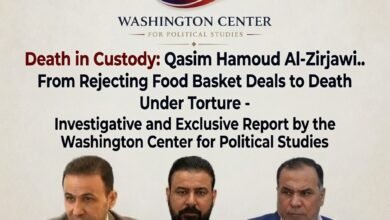
Death in Custody: Qasim Hammoud Al-Zirjawi.. From Rejecting Food Basket Deals to Death Under Torture – Will Ali Al-Zaidi Open His File or Bury It in the Name of Fighting Corruption?
Executive Summary In August 2021, Engineer Qasim Hammoud Mansour Al-Zirjawi, Director General of the General Company for Trade in Foodstuffs at the Iraqi Ministry of Commerce, died after a few weeks of his arrest. His family and close sources confirm that he was subjected to brutal torture inside the detention cells, and the photos provided by the family show severe bruises all over the body and the loss of several…
Read More » -
May- 2026 -7 May
Iran’s Expansion of the Conflict: Why the UAE Was Targeted Despite Not Being a Direct Party to the War
The recent Iranian strikes against the United Arab Emirates, particularly targeting Abu Dhabi, mark a dangerous escalation in the regional security landscape and raise serious questions about Tehran’s strategic calculations. The UAE has not been a direct party to the conflict between Iran and the United States, nor has it pursued policies aimed at provoking military confrontation with Tehran. On the contrary, the UAE has consistently positioned itself as a…
Read More » -
Apr- 2026 -28 April
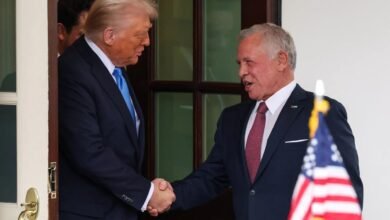
Jordan in the U.S.–Iran Escalation Equation: Quiet Deterrence and Strategic Equilibrium
The confrontation between the United States and Iran places Jordan before a complex security and political test, one that extends beyond the protection of its airspace and borders to the management of its sensitive geopolitical position amid multiple conflict zones. By virtue of its location between Iraq, Palestine, and Saudi Arabia, Jordan does not approach the crisis as a distant observer, but rather as a frontline state directly exposed…
Read More » -
14 April

Iran-Backed Militias’ Relentless Attacks on Iraqi Kurdistan – Targeting Civilians and Exposing Baghdad’s Troubling Silence
The repeated targeting of Iraq’s Kurdistan Region by Iran-aligned armed factions represents one of the most serious threats to Iraq’s sovereignty and regional stability in recent years. Since the escalation of broader Middle East tensions in early 2026, these groups — operating under banners such as the “Islamic Resistance in Iraq,” including factions like Ashab al-Kahf and others linked to the Popular Mobilization Forces (PMF) — have launched hundreds…
Read More » -
13 April
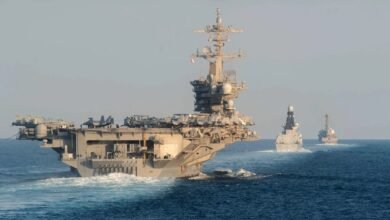
The Economic Impact of U.S. Naval Pressure on Iran: Scale, Effectiveness, and Global Implications.
The current U.S. naval pressure on Iran represents a significant escalation beyond traditional sanctions, moving into what can be described as a semi-blockade environment. While it may not constitute a full classical blockade in the legal or military sense, its functional impact on Iran’s economy could be comparable, particularly if enforcement is sustained and broadly respected by global shipping and financial networks. At the core of this situation lies…
Read More » -
12 April

U.S. Central Command to Enforce Maritime Blockade on Iranian Ports: Strategic Implications and Global Repercussions
In a significant and potentially transformative development, the United States Central Command (CENTCOM) has announced that it will begin enforcing a comprehensive maritime blockade on all shipping traffic entering and exiting Iranian ports. The measure is scheduled to take effect on April 13 at 10:00 a.m. Eastern Time and is being implemented in accordance with a presidential directive. This decision signals a major escalation in U.S. policy toward Iran…
Read More » -
12 April
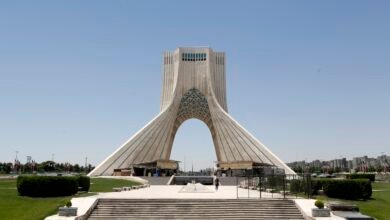
Strategic Retreat or Tactical Survival? Iran’s Growing Pattern of Abandonment
In the shifting landscape of Middle Eastern geopolitics, a pressing question is gaining traction among analysts and policymakers alike: is Iran beginning to abandon its regional allies and proxy networks in exchange for economic relief and political survival? Recent developments have fueled this debate. Reports and diplomatic signals suggest that Tehran may be recalibrating its long-standing strategy of projecting influence through allied groups across the region. Nowhere is this…
Read More » -
12 April
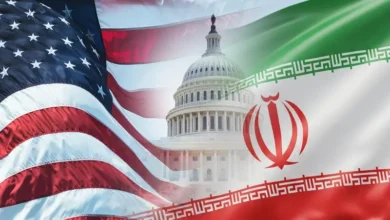
Islamabad Talks Collapse: Iran Blamed as U.S. Holds Firm Line
Islamabad Talks Collapse: Iran Blamed as U.S. Holds Firm Line Islamabad — Negotiations between Iran and the United States ended in failure this week in the Pakistani capital, with diplomatic sources pointing to deep divisions and Iran’s unwillingness to compromise as the primary cause of the breakdown. The talks, which were held behind closed doors in Islamabad, had been viewed as a potential step toward easing long-standing tensions between Tehran…
Read More » -
8 April
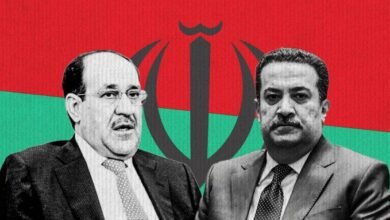
Washington Draws a Red Line: U.S. Rejects Maliki Amid Security Failures Under Al-Sudani
Baghdad — The United States is making clear that it opposes any return of former Prime Minister Nouri al-Maliki to power, while also voicing growing concern over the current government’s inability to rein in armed factions and guarantee the safety of American citizens in Iraq. Diplomatic sources indicate that Washington views Maliki’s potential comeback as a destabilizing move. His previous tenure remains closely associated with policies that deepened sectarian…
Read More »