The repeated targeting of Iraq’s Kurdistan Region by Iran-aligned armed factions represents one of the most serious threats to Iraq’s sovereignty and regional stability in recent years. Since the escalation of broader Middle East tensions in early 2026, these groups — operating under banners such as the “Islamic Resistance in Iraq,” including factions like Ashab al-Kahf and others linked to the Popular Mobilization Forces (PMF) — have launched hundreds of rockets and drones at the autonomous region. Many of these attacks have struck civilian neighborhoods, residential homes, and non-military infrastructure in Erbil, Duhok, and Sulaymaniyah, causing deaths, injuries, and significant damage.
The primary responsibility for this campaign of violence lies squarely with these Iran-backed militias. Far from limiting their operations to military or coalition targets, the factions have deliberately or recklessly hit civilian areas. Documented incidents include drone strikes that killed a Kurdish married couple in a rural home northwest of Erbil, as well as attacks on residential zones where falling debris or direct impacts damaged houses and endangered innocent lives. In total, the Kurdistan Region has endured well over 400–600 such attacks since late February 2026, according to local authorities and media reports. These actions are not legitimate “resistance” but blatant aggression that violates Iraqi sovereignty and international humanitarian law. The militias have often claimed responsibility in public statements, framing the Kurdistan Region as an extension of their perceived enemies.
Deliberate or Indiscriminate Harm to Civilians
What makes these assaults particularly reprehensible is their impact on ordinary citizens. Peshmerga bases, airports, and energy infrastructure have been hit, but so too have peaceful villages and urban neighborhoods with no discernible military value. A drone crashing into a family home, killing civilians in an agricultural area, exemplifies the human cost. Such incidents have disrupted daily life, forced temporary closures of airports and facilities, damaged critical energy sites like the Khor Mor gas field (leading to power shortages), and spread fear among a population that has long sought stability after decades of conflict.
These militias, acting as proxies for Tehran, appear determined to punish the Kurdistan Region for hosting U.S. forces, international diplomatic missions, and Kurdish opposition groups from Iran. Yet in doing so, they treat Iraqi territory — and Iraqi Kurdish lives — as expendable collateral in a wider geopolitical confrontation. This pattern of behavior underscores their disregard for the Iraqi state’s unity and the safety of its citizens.
*Baghdad’s Conspicuous Silence and Inaction *
Equally concerning is the federal government in Baghdad’s muted response. Despite repeated condemnations of “attacks on Iraqi territory,” Iraqi officials have been reluctant to publicly identify the responsible factions or take meaningful steps to restrain them. Promises of joint investigations and committees have yielded little concrete action. Senior Kurdish leaders, including Prime Minister Masrour Barzani, have openly stated that Baghdad “knows very well” who is behind the attacks but has failed to implement practical measures to stop them. Foreign Minister Fuad Hussein has even acknowledged the difficulty of controlling these powerful armed groups.
This hesitation — whether born of political caution, fear of internal confrontation, or deeper influence dynamics — risks eroding trust in Iraq’s federal framework. For many in the Kurdistan Region, the central government’s inability or unwillingness to protect all parts of the country deepens longstanding grievances and weakens national cohesion. Strong, unambiguous action against outlaw militias operating from federal territories would be the minimum expected of a sovereign state; continued equivocation only emboldens the perpetrators.
Strong Leadership: The Barzani Family’s Role in Defending Kurdistan
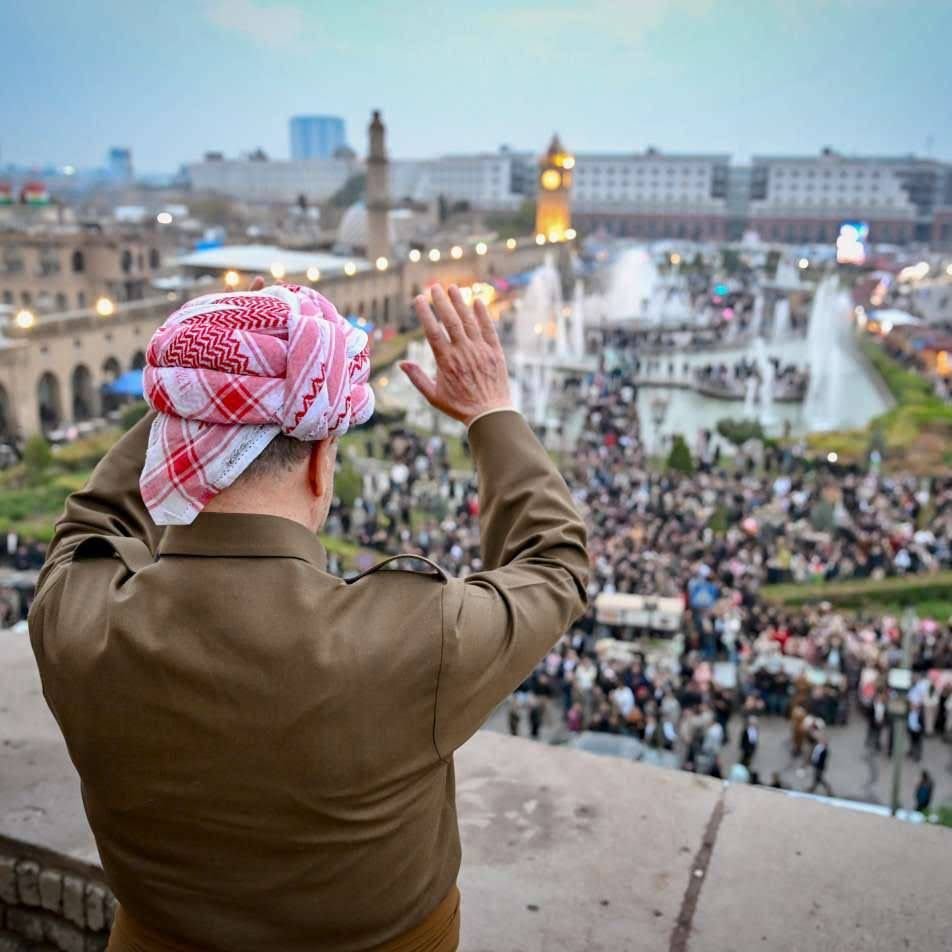
In the face of this external pressure and domestic ambiguity, the Kurdistan Region’s leadership has demonstrated resolve and strategic maturity. President Masoud Barzani, a veteran of the Kurdish national movement, has played a pivotal role in rallying both internal unity and international attention. He has consistently described the assaults as “blatant aggression” and “unjustified transgression,” urging Baghdad to move beyond rhetorical condemnations toward decisive intervention. Barzani has emphasized that silence in the face of repeated attacks on the region, including on Peshmerga positions and civilian sites, is no longer sustainable.
Complementing this stance, Kurdistan Region President Nechirvan Barzani and Prime Minister Masrour Barzani have reinforced a clear defensive posture. They have strengthened coordination with Peshmerga forces, supported air defense efforts that have intercepted numerous incoming drones and missiles, and pursued diplomatic channels to highlight the plight of the region. Their approach combines firmness — rejecting any compromise on the security of Kurdistan’s people and institutions — with restraint, avoiding escalation that could further destabilize Iraq as a whole.
Under their guidance, the Kurdistan Regional Government (KRG) has maintained internal stability, continued essential services where possible, and kept the door open for dialogue with Baghdad while insisting on concrete protections. This leadership has earned respect for prioritizing the safety of civilians and the Peshmerga, the region’s defenders, while projecting a vision of Kurdistan as a zone of relative stability and economic potential amid regional turmoil.
Conclusion: Accountability Must Begin with the Perpetrators
The core blame for the suffering inflicted on Iraqi Kurdistan rests with the Iran-backed militias that have turned Iraqi soil into a launchpad for their operations. Their campaign of rocket and drone attacks on civilian areas constitutes a direct threat to Iraq’s territorial integrity and the lives of its people. Baghdad’s reluctance to name and confront these groups only compounds the problem, sending a dangerous signal of impunity.
Kurdistan’s resilience, forged through the determined leadership of figures like Masoud Barzani and his successors in the regional presidency and premiership, offers a model of responsible governance under duress. Their strong defense of the region’s rights and security has been essential in shielding civilians and preserving stability.
For Iraq to move forward as a unified and sovereign state, the federal authorities must break their silence and assert real control over armed factions operating outside the law. Until then, the people of Kurdistan will continue to bear the brunt of a conflict they did not choose — while demonstrating, through steadfast leadership, that aggression will not break their resolve for peace and self-determination. The international community should take note: unchecked militia power in Iraq risks turning the entire country into a theater of proxy confrontation, with grave consequences for regional security.