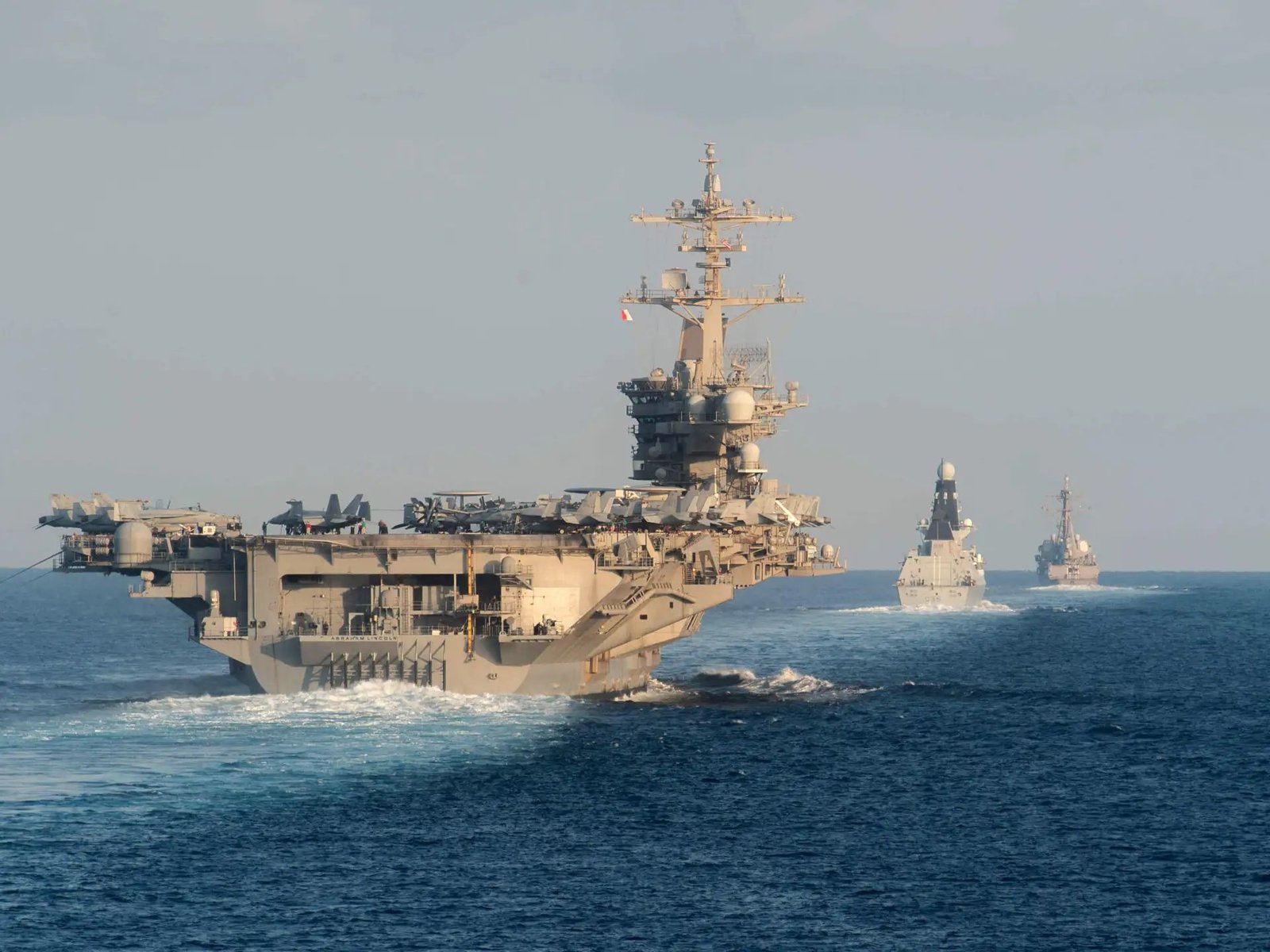
The current U.S. naval pressure on Iran represents a significant escalation beyond traditional sanctions, moving into what can be described as a semi-blockade environment. While it may not constitute a full classical blockade in the legal or military sense, its functional impact on Iran’s economy could be comparable, particularly if enforcement is sustained and broadly respected by global shipping and financial networks.
At the core of this situation lies Iran’s structural dependence on maritime exports, especially crude oil and petrochemical products. The Iranian economy, already constrained by years of sanctions, relies heavily on external revenue streams denominated in hard currency. Any disruption to maritime trade, therefore, directly translates into fiscal strain, currency pressure, and broader economic instability. Estimates suggesting losses of up to 450 million dollars per day reflect not only the potential halt in oil exports but also the cascading effects across logistics, insurance, storage, and pricing mechanisms.
In purely direct terms, the most immediate loss comes from oil exports. Even under sanctions, Iran has maintained a relatively resilient export network, often relying on a shadow fleet and discounted sales, particularly to Asian buyers. However, a naval enforcement mechanism introduces a new layer of risk that goes beyond financial penalties. Physical interception, delays, or even the credible threat of such actions can significantly deter shipping companies, insurers, and intermediaries. As a result, even if oil is technically available for sale, the infrastructure required to move it becomes constrained, raising transaction costs and reducing effective export volumes.
Beyond the direct oil revenue losses, the broader economic damage is likely to be more severe over time. Shipping insurance premiums rise sharply in contested environments, and in many cases, insurers may refuse coverage altogether. This forces traders to either assume unacceptable risks or withdraw from the market. Simultaneously, ports become congested, storage capacity becomes limited, and supply chains lose efficiency. Iran may be forced to store unsold oil in tankers offshore, creating logistical bottlenecks and additional financial burdens. These indirect effects compound the economic pressure and can push total losses toward the higher estimates cited.
The effectiveness of such a blockade depends largely on its duration and the degree of international compliance. In the short term, the psychological and operational shock to the shipping market can produce immediate disruption. However, Iran has historically demonstrated a capacity to adapt. Workarounds such as ship-to-ship transfers, reflagging of vessels, opaque ownership structures, and alternative routing may partially mitigate the impact. Additionally, pre-existing floating storage and previously contracted shipments may allow Iran and its buyers to absorb some of the initial shock.
A critical factor in determining the long-term success of this strategy is the behavior of China and other countries that continue to engage economically with Iran. In principle, the United States may attempt to stop or inspect any vessel trading with Iranian ports, regardless of nationality. This includes Chinese vessels. However, in practice, the situation is far more complex. Intercepting or detaining ships linked to major powers such as China carries significant geopolitical risks and could lead to escalation beyond the economic domain. Therefore, enforcement may be selective, focusing on deterrence rather than systematic interdiction of all vessels.
China, in particular, is likely to play a decisive role. As one of the primary buyers of Iranian oil, it has both the economic incentive and the logistical capability to sustain imports under pressure, especially through indirect channels. If China chooses to continue purchasing Iranian oil at scale, even at discounted rates, it could significantly blunt the impact of the blockade. Conversely, if pressure or risk leads Chinese entities to reduce engagement, Iran’s economic losses would deepen considerably.
In conclusion, the current U.S. naval pressure has the potential to inflict serious economic damage on Iran, particularly by targeting its most critical vulnerability: maritime exports. While the figure of 450 million dollars per day may represent an upper-bound estimate, the overall direction of impact is clear. The real question is not whether Iran will suffer losses, but rather how effectively it can adapt and how far the United States is willing to go in enforcing the blockade, especially when it comes to ships belonging to major global powers.