Syria After Isolation: A Calculated Return to the Scene
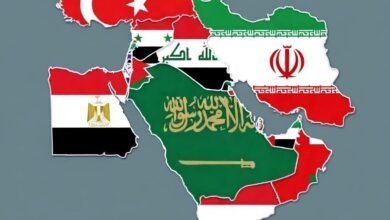
Syria is now entering a political phase distinct from the early years of the war. It is no longer fully isolated, yet it has not fully regained its natural place within the regional order. Its return to the Arab League and the cautious openness from several Gulf capitals reflect a shift in the Arab approach—from disengagement to containment. This shift does not stem from a fundamental transformation in the structure of the Syrian regime, but rather from a regional recognition that isolation has failed to achieve its goals, and that reintegrating Damascus may help rebalance dynamics, particularly in limiting Iranian influence.
Despite this opening, Syria remains heavily constrained by Western sanctions, which limit any meaningful economic recovery. This reality continues to push Damascus toward reliance on its traditional allies, Russia and Iran, even as that reliance has become less comfortable than before.
Delicate Balances: A Policy of Conditional Engagement
Damascus is currently managing its external relations through a pragmatic approach, opening channels without making fundamental concessions. Its rapprochement with Gulf states remains cautious and tied to clear demands related to regional security, while normalization efforts with Turkey remain stalled due to conflicting interests, particularly over the Kurdish issue and military presence in northern Syria. At the same time, Syria maintains a level of coordination with neighboring countries such as Jordan and Iraq, serving border stability and addressing shared security concerns.
This landscape suggests that Syria has not yet entered new alliances as much as it is attempting to reestablish itself within a flexible network of relations, avoiding both full disengagement and total dependency.
Thomas Barrack’s Statements: Reading Between the Lines
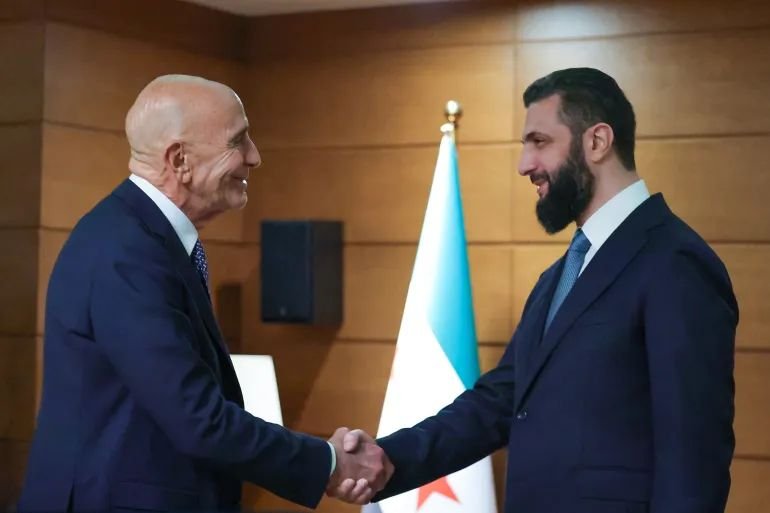
Thomas Barrack’s remarks are significant because they reflect a perspective present within certain Western political circles—one that views Syria as a potential actor to be repositioned within emerging regional arrangements, possibly even integrated into a normalization track with Israel.
When Barrack states that Syria has not fired a single shot at Israel, he highlights a historical reality regarding the relative calm along the Golan front for decades. This calm was not an expression of political alignment, but rather a long-standing balance of deterrence, governed by unwritten rules of engagement. His claim that Syria is not currently acting in a hostile manner carries some exaggeration, as Israeli strikes inside Syrian territory continue, reflecting an ongoing indirect conflict largely tied to Iran’s presence.
More striking is his assertion that a non-aggression agreement—or even normalization with Syria—could occur sooner than with Lebanon. This reflects a belief in the regime’s pragmatism and an assumption that economic and political pressures might push Damascus toward unconventional choices. However, this assessment overlooks deeper complexities, including Syria’s strategic ties with Iran, the sensitivity of the Golan issue, and the absence of any real negotiation framework at present.
Israel and Syria: Between Stability and Indirect Conflict
The current relationship between Syria and Israel can be described as “neither war nor peace.” While the border remains largely calm, Israeli military activity continues within Syrian territory. This reflects a shift in the nature of conflict—from direct confrontation to ongoing management of tension without escalation into full-scale war.
Barrack’s references to the Druze and Israel’s view of border dynamics also point to a broader Israeli approach that extends the concept of security beyond geographic boundaries, incorporating social ties and preemptive operations. His comment that Netanyahu “does not care about borders” suggests a more fluid—or more expansive—Israeli security doctrine that prioritizes strategic depth over traditional territorial constraints.
Is Normalization Truly Approaching?
Despite such narratives, there are no concrete indications that Syria is moving toward direct normalization with Israel. What exists in reality is a form of long-term security stability, coupled with careful management of conflict, and only theoretical possibilities of future negotiations contingent on major regional shifts.
In other words, Syria is neither heading toward confrontation with Israel nor toward imminent normalization. Instead, it continues to operate within a strategy of waiting, observing broader transformations that could eventually reshape the region.
Conclusion: Pragmatism Within Constraints
Syria today operates within a narrow margin, attempting to balance breaking isolation with preserving its alliances, and regional openness with avoiding strategic concessions. As for the idea of imminent normalization with Israel, it remains more a reflection of political speculation than of current reality, in a regional landscape that remains fluid, complex, and far from settled.